

This short video shows how to calculate loan repayments on a reducing balance, compound interest loan using the Financial app of a CASIO fx-CG series graphics calculator. CG20 AU and CG50 AU versions presented.
This short video shows how to change a graph’s View Window, using the Graph app of a CASIO fx-CG series graphics calculator, and discusses some of the advantages and disadvantages of different View Window settings. CG20 AU and CG50 AU versions are presented.
This short video shows how to perform trigonometric calculations using the Run-Matrix app of a CASIO fx-CG series graphics calculator in order to solve simple trigonometric equations. CG20 AU and CG50 AU versions are presented.
This unit uses the context of generosity to introduce a need to have a fractional way of thinking about something.
It develops a way of thinking about fractions – the for-every idea – that is the elusive multiplicative model.
Developed over about 5 years, this approach has been tried and seems to work. 🙂
This short video shows how to find the roots of a polynomial function up to degree 6, using the Equation app of a CASIO fx-CG series graphics calculator. CG20 AU and CG50 AU versions presented.
This short video shows how to draw an animated ‘dynamic’ graph showing the effect of changing a parameter upon the graph of a function, using the Dyna Graph app of a CASIO fx-CG series graphics calculator. CG20 AU and CG50 AU versions presented. In particular, the effect of changing the gradient value “m” in a linear function of the form y=mx+c is addressed.
A selection of documents that share some nice ideas about exponential functions, trigonometric functions and a lovely context where both concepts come together.
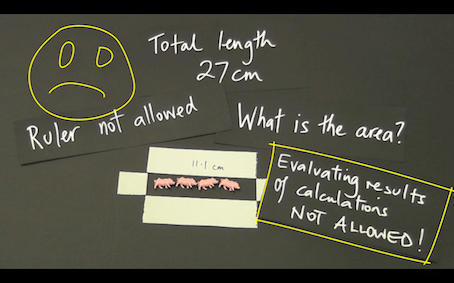
Pigs, pens and mathematics is a two to four lesson, tried and proven, activity that moves students from measurement-thinking to functional-thinking with the help a simple but rarely used idea – do not evaluate a calculation.
A small, but authentic and enlightening use of electronic technology is made.
It would fit perfectly in a measurement topic at any of the years 8 to 11.
In this collection of resources you will find:
a) a two-part introductory video, that can be played to the class to kick things off,
b) one support video that shows “how to” do the technical stuff on the CG 20 AU,
c) one support video that explores the mathematical ideas that can be developed with the help of the technology,
d) one ‘task sheet’ for students to work on after watching the videos or being instructed by the teacher,
e) a complete ‘unit of work’ that allows students to consolidate the mathematical ideas and skills they have learned.
Download a program that will creates the number of samples you desire, of a size you define from a normal population with standard deviation and mean you define.

A video introduction presents the mathematics of cup snakes, a hands on phenomena involving additive change that gives rise to a way to think about linear growth. Modeling this phenomena theoretically, with the help of two cups, and through data, with the help of many, many cups, these videos give rise to some of the big ideas around developing and using linear algebraic models to describe additive bi-variate change. These ideas are then unpacked in the accompanying ‘chapter replacement’ booklet.